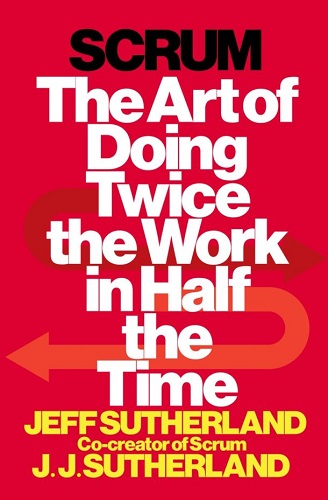
The book starts telling us how the waterfall model, which is frequently adopted by the companies, is ultimately the reason behind many delays and increased costs. In this particular methodology, a large long-term plan is made on beginning of each project, resulting on some gigantic and almost useless reports.
The Scrum was designed to change that, aiming primarily to achieve a higher productivity plus quality combination. Hence the question: Is this utopic? Well, as soon as you read the book, and mainly start to working following the Scrum concepts, you convince yourself that it is definitely not.
Scrum was conceived based on its homonym coming from Rugby. In Rugby, the scrum is a moment on the game where every player should be perfectly tuned with his teammates, putting efforts in a coordinated and synched way.
The concept behind Scrum, is the idea of making regular breaks to check whether the project is following the right path. These breaks are also meant to identify obstacles, their workarounds and check if the partial results are satisfactory so far.
One of the main points Scrum brings is the idea of time management. For instance, how to do more in less time. Sutherland cites in his book: “Time makes up your life, so wasting it is actually a slow form of suicide”.
The book gives us a heads up when it comes to Multitasking, it encourages us to do one single task at a time. By doing so, we can both intensify our efforts to a specific job and avoid wasting time with the change of contexts.
Every meeting in the Scrum model, known as Sprints, ends up with important questions such as: What went well? What didn’t go well? What can be improved? The Japanese people use a word to describe this attitude: “kaizen”, literally meaning change for better.
I strongly recommend you to follow the Scrum model, as it is a proven way of increasing productivity and quality for every sort of project, especially those in the software development area.